
Outdoor Lighting in Fallston, MD
Outdoor Lighting Company in Fallston for Safer, More Usable Evenings
Outdoor lighting can make a property feel more comfortable, more usable, and more complete after sunset. In Fallston, larger yards, long walkways, pool areas, wooded edges, patios, and outdoor kitchens often need lighting that is planned around both safety and atmosphere.
Bayside Outdoor Living designs and installs outdoor lighting in Fallston, MD for patios, walkways, steps, retaining walls, seating areas, outdoor kitchens, pergolas, pavilions, pool decks, planting beds, and full outdoor living spaces. The goal is to help the property feel easier to move through at night while keeping the lighting warm, balanced, and intentional.
Lighting That Supports the Way the Property Is Used
A lighting plan should begin with how people move through the outdoor space after dark. A front walkway may need soft guidance from the driveway to the door. A backyard patio may need better visibility near steps, seating areas, or cooking zones. A pool area may need lighting that helps define edges without making the space feel harsh.
Fallston homes often have more distance between outdoor areas, which makes lighting especially important. A patio, fire feature, pool deck, or pavilion may feel disconnected at night if the route between those spaces is too dark.
Bayside Outdoor Living plans lighting as part of the larger landscape. The right fixtures, spacing, brightness, and placement can help the property feel safer, more welcoming, and more useful in the evening.
Outdoor Areas That Usually Need Lighting First
A good lighting plan should prioritize the areas that affect movement, comfort, and nighttime use before adding decorative accents.
Walkways and Entry Routes
Path lights can help guide movement from driveways, gates, patios, and side yards without creating glare or overlighting the landscape.
Steps and Grade Changes
Step lights, wall lights, and low fixtures can make changes in elevation easier to see, especially near patios, retaining walls, and pool areas.
Gathering and Activity Zones
Outdoor kitchens, dining patios, fire features, pavilions, and seating areas should have enough light to feel usable while still keeping a relaxed evening atmosphere.
Fallston Yards Often Need Lighting Across Larger Spaces
Some properties need more than one lighting zone because the outdoor areas are spread out. A front entry may need one approach, while the backyard may need a different plan for patios, walkways, pool areas, and wooded edges.
Open lawns can also create dark gaps between important areas. Without lighting, guests may avoid using parts of the yard after sunset, even if the space is well designed during the day. A thoughtful lighting plan can connect those areas without making the yard feel too bright.
Tree cover, long driveways, side-yard access, and detached outdoor spaces should also be reviewed early. Lighting should respond to the way the property actually works at night, not just highlight what looks attractive in daylight.
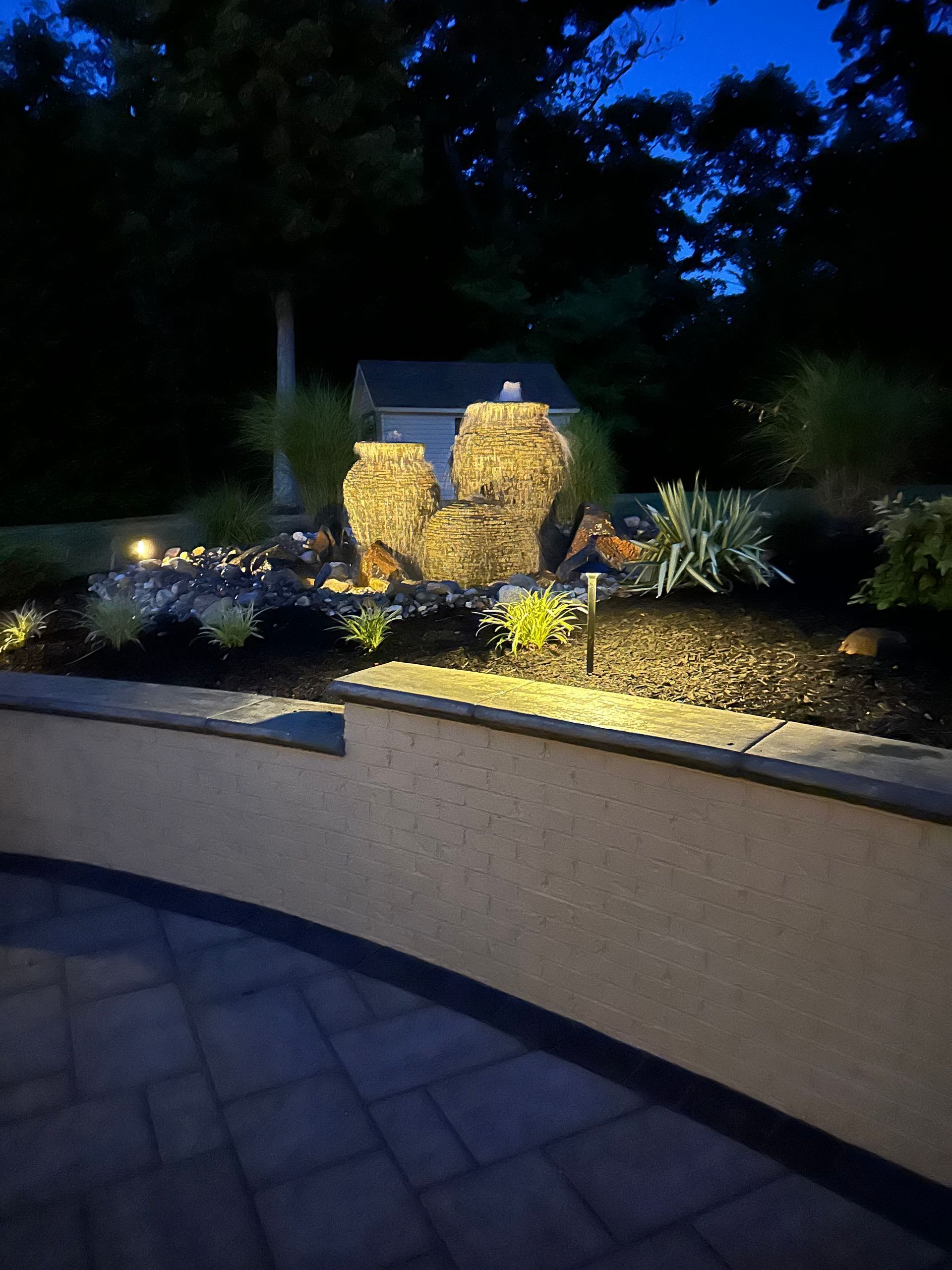
Lighting Features and Placement Details to Consider
The best lighting plans use different fixture types for different purposes. Each light should have a clear role in the overall design.
Path lights
For walkways, garden routes, driveway connections, and routes between outdoor areas.
Step and wall lights
For grade changes, retaining walls, seating walls, patio edges, and transitions.
Accent lights
For trees, planting beds, stonework, water features, or architectural details.
Task lighting
For outdoor kitchens, counters, dining areas, grills, and covered structures.
Control zones
To adjust lighting for entertaining, quiet evenings, pool use, or everyday visibility.
These details help the lighting feel layered instead of flat, giving each part of the outdoor space the right level of visibility.
Balancing Safety, Comfort, and Atmosphere
Outdoor lighting should make the property easier to use without taking away from the natural feel of the yard. Too much brightness can make a patio feel exposed. Too little light can leave steps, paths, and edges difficult to read.
The right balance depends on the area. A cooking space may need more focused light, while a fire feature may only need low lighting around nearby paths and seating edges. A pool deck may need visibility around the water, but the lighting should still feel comfortable for evening relaxation.
Bayside Outdoor Living helps homeowners choose fixture placement, brightness, spacing, and lighting zones that support the way each part of the property is used.
How Lighting Works With Patios, Pools, and Outdoor Structures
Lighting is most effective when it is planned with the outdoor layout. A pavilion may need lights and fans for evening dining. An outdoor kitchen may need task lighting near counters and appliances. A pool deck may need low lighting around edges, steps, and walkways.
Patios and walkways also benefit from lighting that guides movement naturally. Instead of placing fixtures randomly, the plan should follow the way people move from the house to the yard, from the driveway to the patio, or from the pool area to a fire feature.
When lighting is coordinated with hardscapes, walls, planting areas, and outdoor structures, the entire property feels more finished after dark.
From Lighting Plan to Finished Evening Space
Walk the Property After Discussing Nighttime Use
We begin by learning where the property feels too dark, where people gather, and which areas need better visibility after sunset.
Review the Outdoor Layout
A design specialist studies walkways, steps, patios, walls, trees, pool areas, outdoor kitchens, structures, planting beds, and access points.
Create the Lighting Plan
The layout is shaped around fixture placement, lighting zones, wiring routes, brightness levels, focal points, and nighttime movement through the property.
Walk the Property After Discussing Nighttime Use
We begin by learning where the property feels too dark, where people gather, and which areas need better visibility after sunset.
Review the Outdoor Layout
A design specialist studies walkways, steps, patios, walls, trees, pool areas, outdoor kitchens, structures, planting beds, and access points.
Create the Lighting Plan
The layout is shaped around fixture placement, lighting zones, wiring routes, brightness levels, focal points, and nighttime movement through the property.
Confirm Fixtures and Scope
Fixture styles, controls, installation details, project investment, and scheduling are reviewed before the work begins.
Install With Care Around the Landscape
Bayside coordinates fixture placement, wiring, transformer setup, and adjustments around patios, planting beds, walls, and existing outdoor features.
Review the Finished Lighting at Night
Outdoor lighting can help a Fallston property feel safer, more comfortable, and more connected in the evening. Bayside Outdoor Living can plan lighting around your patios, walkways, pool areas, walls, outdoor kitchens, structures, and planting areas so the yard works better after sunset.
Confirm Fixtures and Scope
Fixture styles, controls, installation details, project investment, and scheduling are reviewed before the work begins.
Install With Care Around the Landscape
Bayside coordinates fixture placement, wiring, transformer setup, and adjustments around patios, planting beds, walls, and existing outdoor features.
Review the Finished Lighting at Night
After installation, the lighting is reviewed so paths, gathering areas, accents, steps, and transitions feel balanced and ready for evening use.
Make Your Fallston Outdoor Space More Usable After Dark
Outdoor lighting can help a Fallston property feel safer, more comfortable, and more connected in the evening. Bayside Outdoor Living can plan lighting around your patios, walkways, pool areas, walls, outdoor kitchens, structures, and planting areas so the yard works better after sunset.
FAQs
About Outdoor Lighting in Fallston, MD
What areas should be included in an outdoor lighting plan?
Walkways, steps, patio edges, driveways, pool areas, outdoor kitchens, seating areas, walls, and entry routes are good places to start. Accent lighting can then be added around trees, planting beds, stonework, or special features.
Can outdoor lighting help connect a large backyard?
Yes. Lighting can create clearer routes between the house, patio, pool, fire feature, pavilion, driveway, or side yard. This is especially useful when outdoor areas are spread across a larger property.
How do you keep outdoor lighting from looking too bright?
The plan should use the right fixture types, spacing, brightness levels, and beam direction. Layered lighting usually works better than one strong light because it creates visibility without glare.
Can lighting be added to an existing outdoor living space?
Yes. Existing patios, walkways, walls, structures, pool decks, and planting areas can often be upgraded with outdoor lighting. The design should review wiring routes, fixture placement, controls, and how the space is used at night.