
Outdoor Lighting in Forest Hill, MD
Outdoor Lighting Company in Forest Hill for Safer, More Usable Evenings
Outdoor lighting can change the way a property feels after the sun goes down. In Forest Hill, where homes may have longer driveways, wooded edges, backyard patios, pool areas, garden paths, and outdoor structures, the right lighting plan can make evening use feel safer, warmer, and more intentional.
Bayside Outdoor Living designs and installs outdoor lighting in Forest Hill, MD for patios, walkways, steps, walls, pool decks, pergolas, pavilions, outdoor kitchens, planting areas, driveways, and backyard gathering spaces. Each plan is shaped around how the property is used at night, not just where fixtures can be placed
Lighting That Helps the Property Feel More Usable After Dark
Good lighting should guide people through the outdoor space without overwhelming the yard. A front path may need soft direction toward the entry. A patio may need enough light for conversation and movement. A set of steps or a sloped walkway may need clearer visibility for everyday comfort.
Forest Hill homes often have outdoor areas that are spread across the property. A backyard patio, pool deck, garden route, or fire feature may be beautiful during the day but harder to use once the yard becomes dark. Lighting helps connect those areas so the property feels more complete in the evening.
Bayside Outdoor Living plans lighting around movement, comfort, and atmosphere. The goal is to make outdoor areas easier to enjoy while keeping the nighttime setting calm and balanced.
Areas That Need Careful Lighting Placement
Outdoor lighting works best when each fixture has a purpose. Before choosing fixture styles, the plan should identify where visibility, comfort, or visual interest matters most.
Paths and Entry Points
Walkways, driveways, gates, side-yard routes, and front entries should be easy to follow without harsh glare or uneven lighting.
Steps and Elevation Changes
Steps, wall edges, patio transitions, and sloped areas need thoughtful placement so people can read the space more easily at night.
Outdoor Gathering Areas
Patios, pool decks, kitchens, fire features, pergolas, and pavilions should have lighting that supports activity while still feeling relaxed.
Forest Hill Yards Often Need a Layered Approach
A single light source rarely works well across a larger or more detailed property. A pool area may need soft edge lighting. A walkway may need path lights. A pavilion may need overhead fixtures or fan lighting. Trees, garden beds, and stonework may benefit from subtle accent lighting that adds depth without making the yard feel too bright.
Wooded surroundings can also affect the lighting plan. Tree cover may create deeper shadows near walkways, patios, or side yards. Open lawn areas may need light only along key routes instead of fixtures scattered across the entire yard.
A layered lighting plan allows each area to have the right level of visibility. It also helps the yard feel more natural at night because the lighting follows how people move through the property.
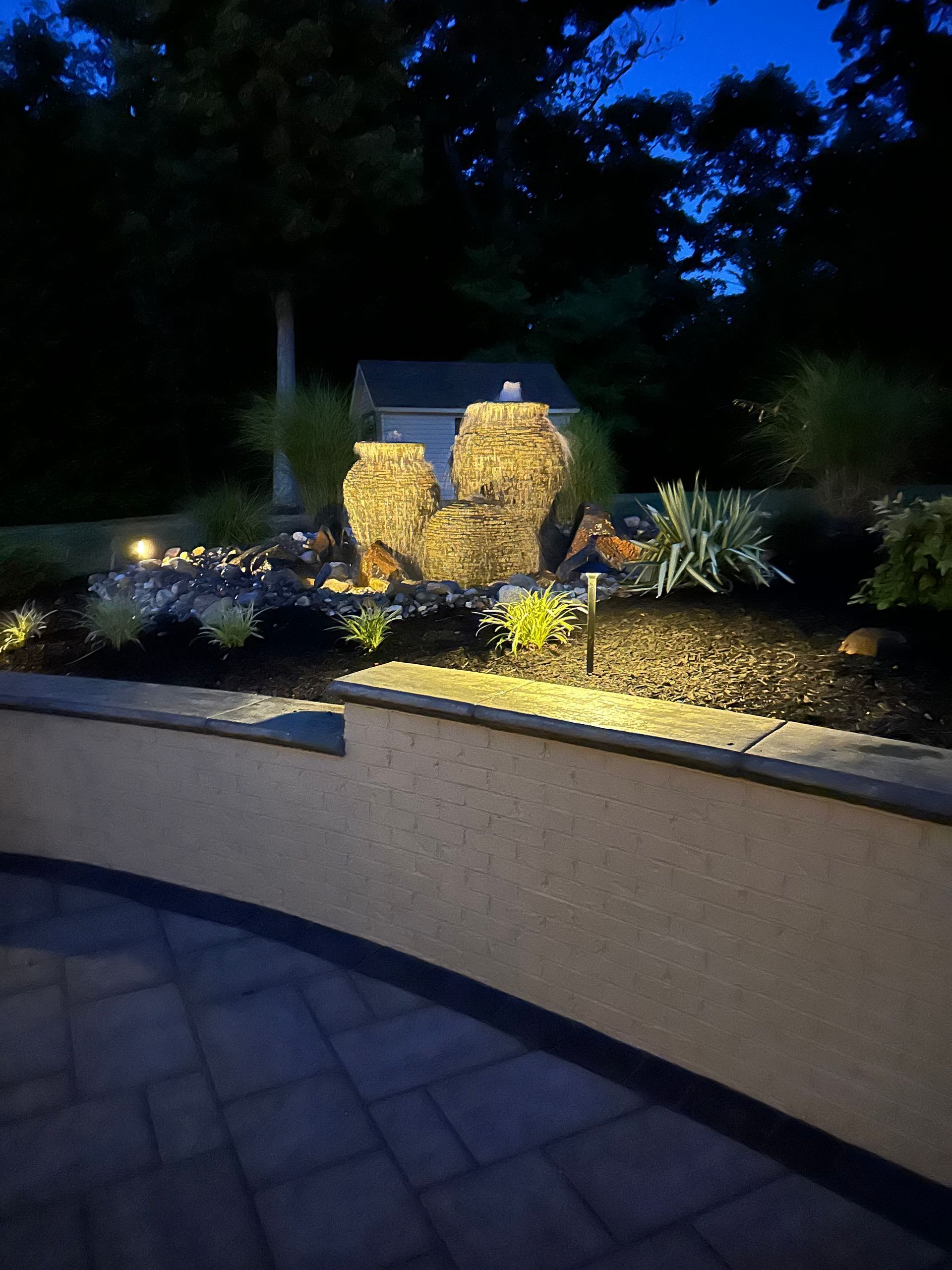
Outdoor Lighting Options to Consider
Different lighting types serve different purposes. The best plan usually combines several fixture styles so the property feels useful, comfortable, and visually balanced.
Path lights
For walkways, garden routes, driveway connections, and movement between outdoor areas.
Step and wall lights
For patios, retaining walls, seating walls, grade changes, and outdoor transitions.
Accent lights
For trees, planting beds, stonework, water features, and architectural details.
Task lighting
For outdoor kitchens, dining areas, counters, grills, and covered structures.
The right combination should support the way the space is used instead of making every part of the yard equally bright.
How Lighting Works With Outdoor Living Features
Lighting should be planned with the rest of the outdoor design. A patio may need low lighting around the edges so people can move comfortably. An outdoor kitchen may need focused light near counters and cooking areas. A pool deck may need a softer plan that makes the edges visible without creating a harsh glare near the water.
Pergolas and pavilions can also benefit from lighting and electrical planning. Fixtures, fans, outlets, and switches should be considered before construction whenever possible so the covered space feels ready for evening use.
When lighting is coordinated with patios, walls, planting areas, and structures, it can make the full outdoor space feel more polished and easier to navigate after sunset.
From Lighting Ideas to a Finished Nighttime Plan
Discuss How the Yard Feels at Night
We begin by learning which areas feel too dark, where people gather, and which routes are used most often after sunset.
Walk the Property
A design specialist reviews paths, patios, steps, walls, trees, planting beds, pool areas, outdoor kitchens, structures, and other features that may need lighting.
Build the Lighting Layout
The plan is shaped around fixture locations, brightness levels, wiring routes, focal points, control zones, and the way people move through the property.
Discuss How the Yard Feels at Night
We begin by learning which areas feel too dark, where people gather, and which routes are used most often after sunset.
Walk the Property
A design specialist reviews paths, patios, steps, walls, trees, planting beds, pool areas, outdoor kitchens, structures, and other features that may need lighting.
Build the Lighting Layout
The plan is shaped around fixture locations, brightness levels, wiring routes, focal points, control zones, and the way people move through the property.
Review Fixtures and Scope
Fixture styles, placement, controls, installation details, project investment, and scheduling are reviewed before the work begins.
Install With the Landscape in Mind
Bayside coordinates wiring, transformer placement, fixture installation, and adjustments around existing hardscape, planting areas, and outdoor features.
Review the Lighting After Sunset
Once installed, the lighting is reviewed at night so paths, steps, accents, and gathering areas feel balanced and ready to use.
Review Fixtures and Scope
Fixture styles, placement, controls, installation details, project investment, and scheduling are reviewed before the work begins.
Install With the Landscape in Mind
Bayside coordinates wiring, transformer placement, fixture installation, and adjustments around existing hardscape, planting areas, and outdoor features.
Review the Lighting After Sunset
Once installed, the lighting is reviewed at night so paths, steps, accents, and gathering areas feel balanced and ready to use.
Make Your Forest Hill Outdoor Space Feel Ready for Evening Use
Outdoor lighting can help patios, walkways, pool areas, trees, walls, and gathering spaces feel more comfortable after dark. Bayside Outdoor Living can design a lighting plan for your Forest Hill property that supports safety, atmosphere, and the way you enjoy the outdoors at night.
FAQs
About Outdoor Lighting in Forest Hill, MD
What areas should be lit first?
The most important areas are usually walkways, steps, patio edges, entry routes, driveways, gates, and places where elevation changes. After those are addressed, accent and gathering-area lighting can be added.
Can lighting be added to an existing patio or pool area?
Yes. Existing patios, pool decks, walkways, walls, and planting areas can often be upgraded with outdoor lighting. The design should review wiring routes, fixture placement, brightness, and how the space is used at night.
How do you keep outdoor lighting from feeling too bright?
The plan should use softer fixture placement, proper spacing, controlled brightness, and different lighting levels for different areas. This helps create visibility without washing out the yard.
Can outdoor lighting be planned with future projects?
Yes. Lighting can be planned with future patios, walkways, pergolas, outdoor kitchens, walls, or planting areas in mind. This can make later upgrades easier to connect with the original design.