
Retaining Walls & Seating Walls in Lutherville, MD
Retaining Wall Builder in Lutherville, MD for Yards With Better Support and Use
A wall can do much more than hold back soil. In the right location, it can make a sloped area more usable, frame a patio, create built-in seating, manage a grade change, or help an outdoor living space feel more complete. The key is knowing whether the wall is mainly structural, functional, visual, or a combination of all three.
Bayside Outdoor Living designs and builds retaining walls and seating walls in Lutherville, MD with attention to grade, drainage, wall height, soil pressure, material coordination, patio layout, planting areas, and long-term performance. Whether the project supports a slope or adds definition around a gathering space, the wall should feel intentional and properly planned.
When a Yard Needs More Than a Flat Patio
Some outdoor spaces are difficult to use because the grade changes too quickly. A patio may feel squeezed against a slope. A planting bed may wash out after heavy rain. A backyard may have enough square footage but not enough level space for seating, dining, or movement.
In Lutherville, many established properties have older yard layouts, mature trees, garden edges, and elevation changes that influence where walls make sense. A retaining wall can help control a slope, but it should also be planned with nearby walkways, patios, lawn areas, and planting beds in mind. A seating wall can add comfort around a fire feature or patio, but it needs the right height, depth, and placement so it feels natural to use.
Bayside Outdoor Living looks at the full yard before deciding how a wall should function. The result should solve a real site condition while improving how the outdoor space feels.
Wall Details That Affect Strength, Drainage, and Comfort
Retaining walls and seating walls may look simple from the front, but the planning behind them matters. A wall that ignores drainage, base preparation, or surrounding use can create problems later.
Drainage Behind the Wall
Water pressure is one of the most important concerns in retaining wall design. Proper drainage stone, pipe placement when needed, and grading help reduce pressure behind the wall and protect long-term performance.
Base Preparation and Wall Alignment
A stable base helps the wall stay level and properly supported. Alignment, wall batter, block or stone placement, and transitions all affect how the wall performs and how finished it looks.
Height, Seating, and Usability
Seating walls need comfortable proportions, safe placement, and enough space around them for movement. Retaining walls need height and structure based on the slope, soil conditions, and surrounding layout.
Material Coordination With the Patio
Wall materials should work with nearby pavers, steps, fire features, planting beds, and the home’s exterior. This keeps the wall from feeling disconnected from the rest of the outdoor living plan.
Retaining and Seating Walls for Lutherville Properties
Lutherville homes can have yards that were shaped over time rather than designed in one complete phase. A slope may have been planted instead of supported. An older patio may sit below a garden bed. A side yard may need a small wall to make the transition from front to back feel safer and easier to use.
These conditions call for careful planning, especially where mature roots, existing hardscape, drainage paths, or tight access points are involved. A wall near an older home should not overpower the property. It should support the grade, define space, and help the outdoor areas feel more usable.
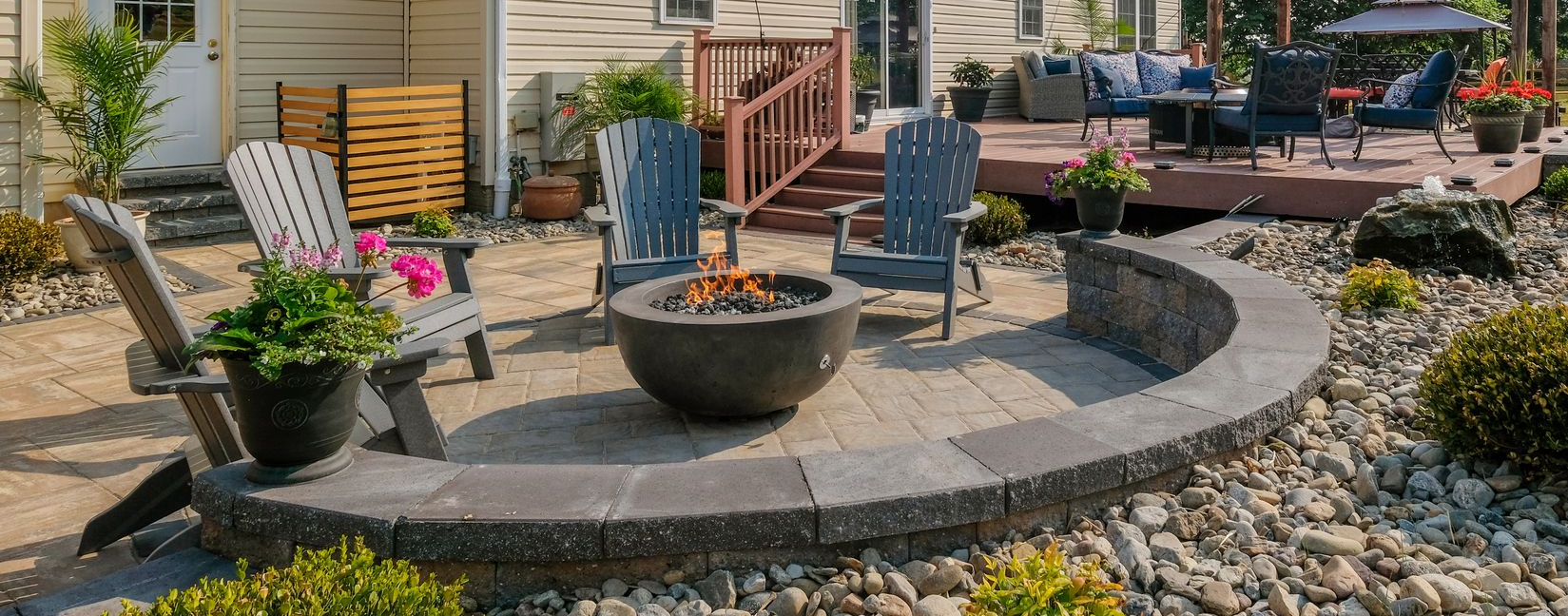
For some homeowners, that may mean a retaining wall that opens up a flatter patio area. For others, it may mean a low seating wall that gives a fire feature or dining area a more finished edge.
Our 6-Step Retaining and Seating Wall Process
Review the Grade and Purpose
We look at the slope, soil conditions, drainage patterns, and the reason the wall is needed, whether for support, seating, space definition, or patio connection.
Study the Surrounding Outdoor Areas
We review nearby patios, walkways, steps, planting beds, trees, lawn edges, and access points so the wall fits the full yard layout.
Plan Wall Height and Placement
We determine where the wall should sit, how tall it should be, how it will transition into surrounding areas, and whether it needs to support soil, seating, or both.
Review the Grade and Purpose
We look at the slope, soil conditions, drainage patterns, and the reason the wall is needed, whether for support, seating, space definition, or patio connection.
Study the Surrounding Outdoor Areas
We review nearby patios, walkways, steps, planting beds, trees, lawn edges, and access points so the wall fits the full yard layout.
Plan Wall Height and Placement
We determine where the wall should sit, how tall it should be, how it will transition into surrounding areas, and whether it needs to support soil, seating, or both.
Coordinate Drainage and Base Support
We plan the base, drainage stone, backfill, water movement, and structural details needed for the wall to perform properly over time.
Build With Material and Layout Control
The wall is installed with attention to alignment, level courses, corners, caps, steps, curves, and how the finished face relates to nearby hardscape.
Review the Finished Wall in Use
We walk the space with the homeowner to review wall function, drainage expectations, seating comfort when applicable, maintenance needs, and how the wall supports the larger outdoor area.
Coordinate Drainage and Base Support
We plan the base, drainage stone, backfill, water movement, and structural details needed for the wall to perform properly over time.
Build With Material and Layout Control
The wall is installed with attention to alignment, level courses, corners, caps, steps, curves, and how the finished face relates to nearby hardscape.
Review the Finished Wall in Use
We walk the space with the homeowner to review wall function, drainage expectations, seating comfort when applicable, maintenance needs, and how the wall supports the larger outdoor area.
Start Planning Retaining or Seating Walls in Lutherville, MD
A well-planned wall can turn a difficult part of the yard into a more useful, stable, and comfortable space. It can support a slope, improve patio layout, create seating, or give the backyard a clearer structure.
Bayside Outdoor Living can help you plan retaining walls and seating walls in Lutherville that fit the property, support the outdoor layout, and hold up to real use over time.
FAQs
About Retaining Walls & Seating Walls in Lutherville, MD
How do I know if I need a retaining wall or just a landscape border?
A landscape border can define an edge, but it is not meant to hold back significant soil or manage a slope. If the ground changes elevation, soil is washing out, or a patio needs support near a grade change, a retaining wall may be the better solution. The site should be reviewed before deciding.
Can a retaining wall also work as seating?
Sometimes, yes. A wall can be designed to provide seating when the height, cap, location, and surrounding patio space make sense. Not every retaining wall is comfortable or safe to sit on, so seating should be planned intentionally from the beginning.
Why is drainage so important behind a retaining wall?
Water buildup behind a wall can add pressure and affect long-term stability. Proper drainage helps relieve that pressure and move water where it belongs. This is especially important in yards with slopes, clay-heavy soils, or areas where runoff collects after rain.
Can a wall make a small backyard more usable?
Yes. A retaining wall can help create more level space, while a seating wall can reduce the need for extra furniture around a patio or fire feature. In a smaller yard, the wall needs to be carefully scaled so it adds function without making the space feel crowded.