
Retaining Walls & Seating Walls in MONKTON, MD
Retaining Wall Builder in Monkton, MD for Sloped and Open Outdoor Spaces
A retaining wall can make a difficult part of the yard easier to use. On Monkton properties, where grade changes, wooded edges, longer yards, and open outdoor areas are common, walls can help shape the land into spaces that feel more stable, more comfortable, and more connected to the home.
Bayside Outdoor Living designs and builds retaining walls and seating walls in Monkton, MD with attention to slope, drainage, wall height, soil pressure, base preparation, material coordination, patio layout, access, and long-term performance. Whether the wall supports a grade change or helps define a gathering space, it should solve a real site condition while improving how the outdoor area functions.
Turning Grade Changes Into Usable Outdoor Areas
A sloped yard can make outdoor living feel limited, even when the property has plenty of space. A patio may need support along one edge. A walkway may need a clearer transition between levels. A fire feature may feel unfinished without a wall to shape the seating area. In some yards, water movement can also make low or sloped areas harder to use after rain.
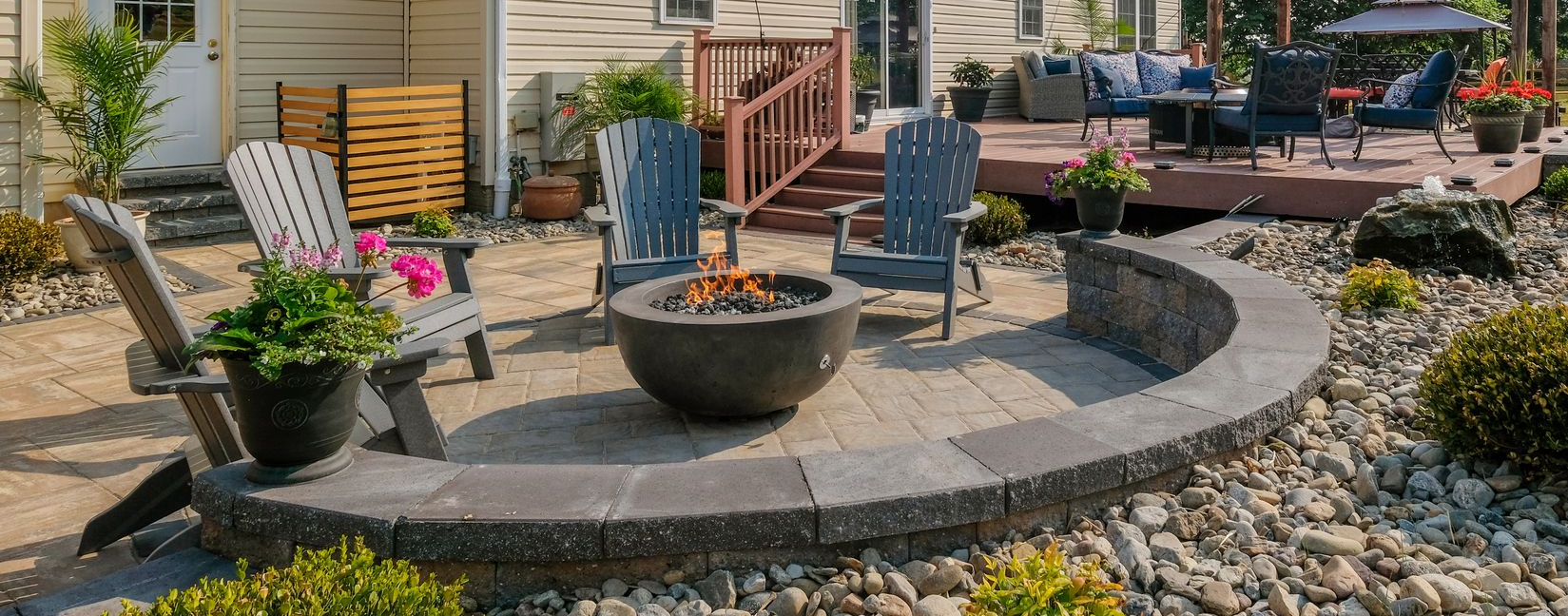
For Monkton homeowners, retaining walls often become part of a larger plan. They may help create a level patio, support a poolside transition, frame an outdoor kitchen, or make a hillside edge feel more intentional. Seating walls can also reduce the need for extra furniture while giving a patio, fire area, or pavilion a stronger sense of enclosure.
The best wall design starts with understanding what the yard needs structurally and how the homeowner wants to use the space.
Retaining and Seating Wall Materials for Monkton Outdoor Spaces
The material used for a retaining wall or seating wall affects the look, strength, maintenance, and how naturally the wall fits into the property. On Monkton homes with wooded edges, slopes, patios, and larger outdoor areas, the wall material should feel appropriate for the setting while still supporting the structure and use of the space.
Segmental Wall Block for Reliable Structure
Segmental wall block is often used for retaining walls because it provides strength, consistency, and flexibility for grade changes. It can work well when the wall needs to support soil, shape a patio edge, or create a more usable level area in the yard.
Natural Stone for a More Organic Look
Natural stone can help a wall feel connected to wooded areas, garden edges, and larger properties with a more natural setting. It brings texture and variation, making it a strong option when the goal is a softer, more established appearance.
Wall Caps for Seating and Finished Edges
For seating walls, height, depth, cap finish, and placement all affect comfort. The wall should feel natural to sit on and easy to use during gatherings.
Coordinated Pavers and Hardscape Materials
When a wall connects to a patio, walkway, fire feature, or pool deck, the surrounding materials should work together. Coordinating pavers, wall block, stone, and border details helps the wall feel integrated instead of separate from the outdoor living space.
Drainage and Structure Behind the Wall Matter Most
A wall’s appearance is only one part of the project. The performance depends heavily on what happens behind and below it. Drainage stone, proper backfill, base preparation, wall alignment, and water movement all influence how the wall handles pressure over time.
On Monkton properties with slopes or wooded surroundings, drainage planning is especially important. Water moving down a grade can add pressure behind a retaining wall if it is not managed correctly. Soil conditions, nearby trees, runoff direction, and the height of the wall should all be reviewed before construction begins.
A well-built wall should feel settled into the yard, but it should also be planned as a working structure. That balance is what helps the wall support the property while still fitting the outdoor living design.
Our 6-Step Retaining and Seating Wall Process
Review the Slope and Wall Purpose
We start by identifying why the wall is needed, whether for soil support, patio definition, seating, grade transition, or a combination of uses.
Study Water Movement and Site Conditions
We review drainage paths, soil behavior, low spots, wooded edges, access points, and nearby outdoor areas before finalizing wall placement.
Plan Height, Shape, and Function
We determine the wall’s height, curves or straight runs, seating potential, connection to steps, and how it should relate to patios, walkways, or structures.
Review the Slope and Wall Purpose
We start by identifying why the wall is needed, whether for soil support, patio definition, seating, grade transition, or a combination of uses.
Study Water Movement and Site Conditions
We review drainage paths, soil behavior, low spots, wooded edges, access points, and nearby outdoor areas before finalizing wall placement.
Plan Height, Shape, and Function
We determine the wall’s height, curves or straight runs, seating potential, connection to steps, and how it should relate to patios, walkways, or structures.
Coordinate Materials and Outdoor Features
We review wall block, natural stone, caps, pavers, nearby hardscape, fire feature connections, and the overall style direction so the wall feels integrated.
Build the Base and Drainage System
Installation includes excavation, base preparation, drainage stone, backfill, compaction, alignment, and construction details suited to the wall’s purpose.
Walk Through the Finished Wall Area
After completion, we review the wall’s function, drainage expectations, seating comfort when applicable, maintenance considerations, and how it supports the larger outdoor space.
Coordinate Materials and Outdoor Features
We review wall block, natural stone, caps, pavers, nearby hardscape, fire feature connections, and the overall style direction so the wall feels integrated.
Build the Base and Drainage System
Installation includes excavation, base preparation, drainage stone, backfill, compaction, alignment, and construction details suited to the wall’s purpose.
Walk Through the Finished Wall Area
After completion, we review the wall’s function, drainage expectations, seating comfort when applicable, maintenance considerations, and how it supports the larger outdoor space.
Start Planning Retaining or Seating Walls in Monkton, MD
A retaining wall or seating wall can change how a Monkton property is used. It can support a slope, open up a patio area, define a fire feature, improve transitions, or make a larger yard feel more organized.
Bayside Outdoor Living can help you plan retaining walls and seating walls in Monkton that fit the land, support long-term performance, and bring more structure to your outdoor living space.
FAQs
About Retaining Walls & Seating Walls in Monkton, MD
When does a sloped yard need a retaining wall?
A retaining wall may be needed when soil is shifting, a patio needs support, a slope limits usable space, or water is causing erosion near an outdoor area. The site should be reviewed carefully because the height, drainage, and soil conditions all affect the right solution.
Can a seating wall be added around a fire feature?
Yes. A seating wall can help define the fire area and provide built-in seating, especially when the patio needs a stronger edge. The wall should be planned at a comfortable height and placed with enough room for movement, chairs, and safe distance from the fire.
Why is drainage important for retaining walls?
Drainage helps reduce water pressure behind the wall. Without proper drainage stone, backfill, and water movement planning, pressure can build up and affect the wall over time. This is especially important on sloped properties or areas that receive runoff during heavy rain.
Can retaining walls help make a larger yard feel more organized?
Yes. Walls can create levels, frame patios, guide movement, and separate outdoor zones without making the yard feel cluttered. On larger Monkton properties, a wall can help turn open or uneven land into outdoor spaces that feel easier to use.