
Retaining Walls & Seating Walls in Reisterstown, MD
Give Difficult Yard Areas a Clear Function
A sloped corner, raised lawn edge, or awkward drop-off can make a Reisterstown backyard feel harder to use than it should. These areas often sit between the spaces homeowners care about most: the patio, pool, deck, driveway, side yard, or lower lawn. Without the right structure, the yard may feel uneven, unfinished, or limited.
Retaining walls and seating walls can turn those problem areas into useful parts of the outdoor plan. A retaining wall can help hold grade and create better surface space, while a seating wall can frame a patio, fire feature, or gathering area with built-in function. Bayside Outdoor Living designs and builds walls in Reisterstown, MD with the structure, drainage, materials, wall caps, pavers, steps, and surrounding outdoor spaces planned together.
Use Walls to Shape the Space, Not Just Hold It Back
A retaining wall should solve more than a grade issue. When it is planned well, it can change the way the backyard feels and works. It can create a cleaner patio edge, support a walkway, open room for furniture, or make a transition between two levels feel more intentional.
In Reisterstown, this is especially useful for yards that have been improved in phases. A patio may need a stronger edge. A pool area may need better support nearby. A deck may step down into a space that needs leveling. A fire feature may feel more complete with a low seating wall around it.
The design should begin with the role of the wall. Is it holding back soil? Creating seating? Framing a patio? Managing a slope? Supporting a future feature? Once that purpose is clear, the wall can be designed with the right height, placement, drainage, cap detail, and material style.
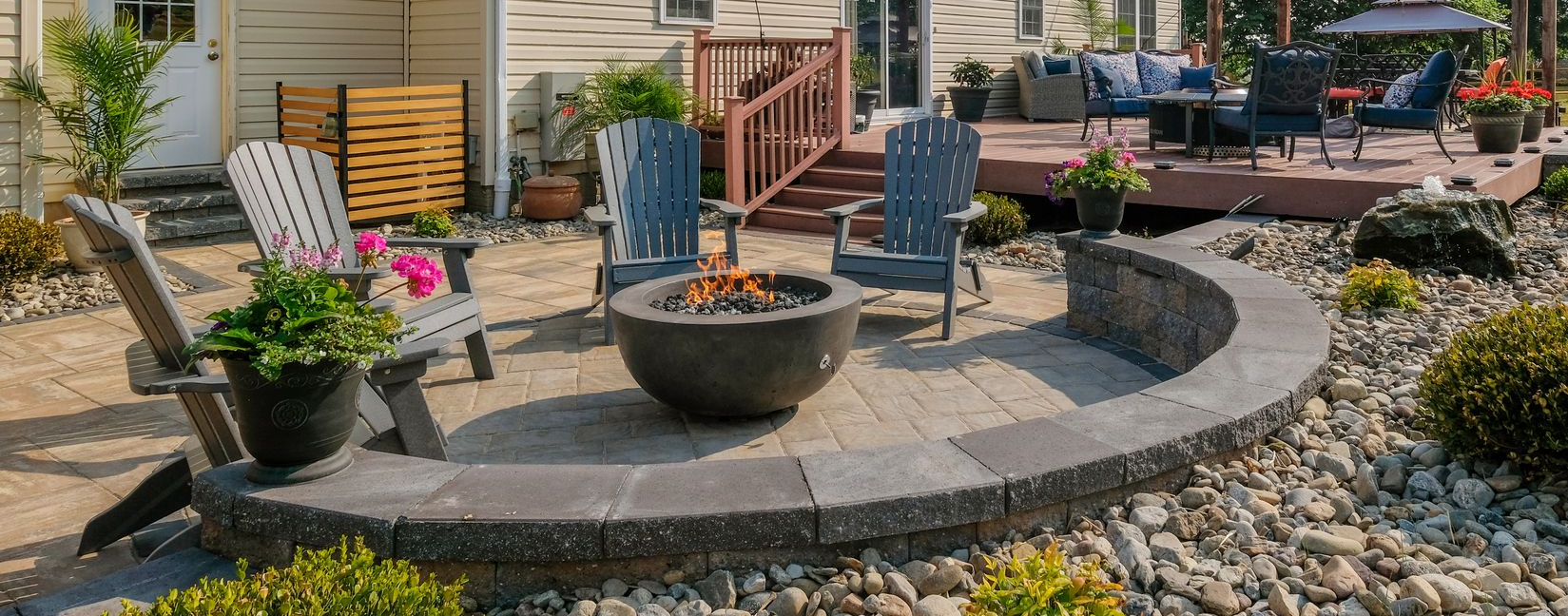
Retaining Wall and Seating Wall Uses for Reisterstown Homes
Patio Support
A retaining wall can help create or protect a more level patio area when the yard changes grade. This can make outdoor dining, seating, and gathering space feel more stable and easier to arrange.
Built-In Seating
A seating wall can add useful places to sit without filling the patio with extra furniture. It works well around fire features, along patio edges, or near outdoor rooms where people naturally gather.
Pool and Backyard Edges
A wall can help define the edge of a pool area, lawn, or outdoor living zone. It can create separation without making the yard feel closed off, especially when the material coordinates with nearby pavers or stone.
Step and Walkway Transitions
Walls can help organize movement between different yard levels. When paired with steps or walkways, they can make the route from the house, patio, pool, or side yard feel safer and more finished.
Plan Drainage Before Choosing the Final Look
The most important part of a retaining wall is often the part homeowners do not see. Soil pressure, water movement, base preparation, backfill, and drainage all affect how the wall performs over time. A wall that looks good on the surface still needs the right structural planning behind it.
Drainage is especially important when the wall sits near a patio, driveway, walkway, pool deck, or lower yard area. Water should be directed properly so it does not build pressure behind the wall or create problems in nearby outdoor spaces.
The wall height also affects the design. A low seating wall has different requirements than a taller retaining wall holding back a slope. Planning these details early helps the wall feel attractive, functional, and appropriate for the property.
Coordinate Wall Materials With Pavers and Hardscape
Wall materials should not be chosen in isolation. A retaining wall or seating wall often sits beside paver patios, walkways, pool decks, fire features, outdoor kitchens, or steps. If those materials do not relate to each other, the finished yard can feel patched together.
Segmental wall block can create a clean, structured look for many outdoor areas. Natural stone can bring more texture and character when the home or yard calls for a softer appearance. Wall caps are also important because they affect comfort, finish, and how well the wall works as seating.
For Reisterstown homes, the best material direction usually respects the character of the property. The wall should look updated, but it should also feel like it belongs with the house, patio surfaces, nearby stonework, and existing outdoor layout.
Our Retaining Wall and Seating Wall Process in Reisterstown, MD
Review the Grade and Outdoor Layout
We look at slopes, patios, walkways, pool areas, deck connections, drainage patterns, access points, and the areas where a wall could improve the space.
Define the Wall’s Main Purpose
We determine whether the wall needs to support soil, create a level area, add seating, frame a patio, guide movement, or connect outdoor levels.
Plan Structure and Drainage
We review height, base preparation, backfill, soil pressure, water movement, and drainage needs before focusing on the finish.
Review the Grade and Outdoor Layout
We look at slopes, patios, walkways, pool areas, deck connections, drainage patterns, access points, and the areas where a wall could improve the space.
Define the Wall’s Main Purpose
We determine whether the wall needs to support soil, create a level area, add seating, frame a patio, guide movement, or connect outdoor levels.
Plan Structure and Drainage
We review height, base preparation, backfill, soil pressure, water movement, and drainage needs before focusing on the finish.
Choose Wall Materials and Caps
We discuss wall block, natural stone, caps, colors, textures, and how the wall should coordinate with pavers, steps, patios, or pool areas.
Coordinate Nearby Features
We plan how the wall relates to seating areas, fire features, walkways, outdoor kitchens, lighting, pool decks, lawn edges, or driveway connections.
Prepare the Project for Construction
Once the structure, layout, materials, drainage, and transitions are clear, the wall project can move forward with a plan built for long-term use.
Choose Wall Materials and Caps
We discuss wall block, natural stone, caps, colors, textures, and how the wall should coordinate with pavers, steps, patios, or pool areas.
Coordinate Nearby Features
We plan how the wall relates to seating areas, fire features, walkways, outdoor kitchens, lighting, pool decks, lawn edges, or driveway connections.
Prepare the Project for Construction
Once the structure, layout, materials, drainage, and transitions are clear, the wall project can move forward with a plan built for long-term use.
Build Better Structure Into Your Reisterstown Yard
A retaining wall or seating wall can make a sloped or unfinished part of your Reisterstown property feel more usable, more organized, and more connected to the rest of the outdoor space. Bayside Outdoor Living can help you design walls that support the yard, improve comfort, and fit the surrounding hardscape.
FAQs
About Retaining Walls & Seating Walls in Reisterstown, MD
When should I consider a retaining wall?
A retaining wall may be useful when a slope, raised area, erosion concern, or uneven grade limits how your yard can be used. It can help create better space for patios, walkways, pool areas, or other outdoor features.
What is the difference between a retaining wall and a seating wall?
A retaining wall is mainly built to hold back soil or manage grade. A seating wall is usually lower and designed to provide built-in seating, often around patios, fire features, or outdoor gathering areas.
Can seating walls be built with paver patios?
Yes. Seating walls can be designed with paver patios, steps, fire features, walkways, and outdoor kitchens so the materials and layout feel connected.
Why does drainage matter behind a retaining wall?
Drainage helps reduce water pressure behind the wall. Without proper drainage planning, water can affect the wall’s performance and create problems near patios, walkways, driveways, or lower yard areas.