
Retaining Walls & Seating Walls in Towson, MD
Make Sloped or Divided Yard Areas Feel More Usable
Many Towson yards have grade changes that affect how the outdoor space can be used. A backyard may slope away from the house, a patio may sit above or below the lawn, or an older wall may no longer match the way the homeowner wants to enjoy the property. When those elevation changes are not planned well, the yard can feel broken into separate pieces instead of one comfortable outdoor living area.
Retaining walls and seating walls can help organize those changes. A retaining wall can support a patio, manage a slope, create a flatter area, or help define outdoor zones. A seating wall can add structure around a fire feature, patio, pool deck, or gathering space while reducing the need for extra furniture. Bayside Outdoor Living designs and builds retaining walls and seating walls in Towson, MD with the yard’s layout, materials, drainage, steps, and surrounding hardscape planned together.
Use Walls to Create Shape, Not Just Hold Back Grade
A retaining wall should do more than solve an elevation problem. When designed well, it can give the backyard a stronger sense of order. It can separate a patio from a lawn, support a raised outdoor kitchen area, frame a pool deck, or create a cleaner transition between the house and the rest of the yard.
In Towson, this matters because many properties have outdoor spaces that were built or expanded over time. A patio may not line up well with the lawn. A walkway may feel steep. A pool area may need a better edge. A wall can help bring these pieces together when it is planned as part of the full outdoor layout.
The best wall design considers both structure and experience. It should address the grade, but it should also make the space easier to walk through, furnish, and enjoy.
Wall Ideas for Towson Outdoor Spaces
Patio Support Wall
A patio support wall can help create a more usable surface where the yard slopes. It can make the patio feel more stable, finished, and connected to nearby steps, walkways, or seating areas.
Terraced Yard Wall
A terraced wall can break a slope into more manageable levels. This can help a backyard feel less steep while creating defined areas for patios, walkways, lawn space, or outdoor features.
Poolside Edge Wall
A poolside wall can help manage elevation around the pool deck while giving the area a cleaner border. It can also support lighting, seating, or transitions to the rest of the backyard.
Fire Feature Seating Wall
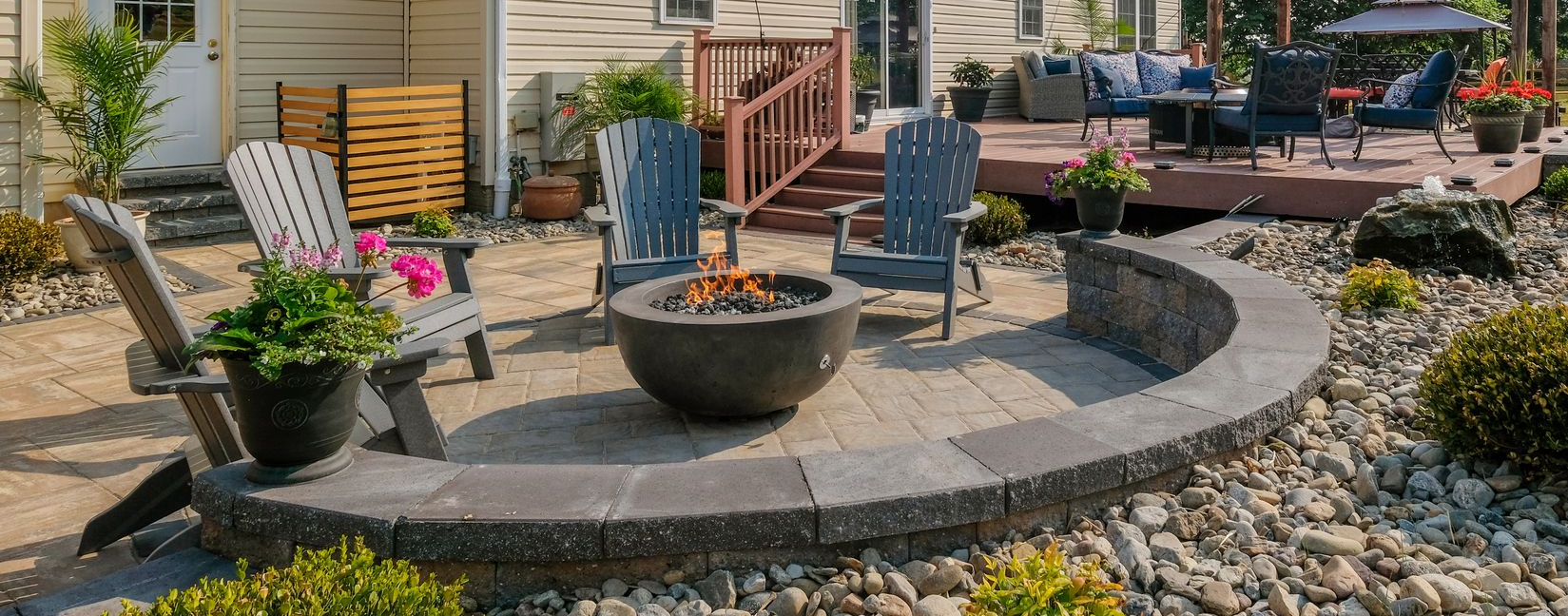
A seating wall around a fire feature can make the gathering area feel more complete. It adds extra places to sit, helps frame the space, and creates a built-in look that works well with pavers and stone.
Plan Drainage and Steps Before Choosing the Finish
Walls need practical planning before the visible materials are selected. Drainage, base preparation, wall height, soil conditions, slope direction, and nearby hardscape all affect how the project should be designed. A wall that looks finished on the surface still needs to work correctly behind the scenes.
Steps are another important detail. If a retaining wall changes the way people move through the yard, the step placement should feel natural. A beautiful wall can still make a yard frustrating if it creates awkward routes or forces people to walk around the outdoor living area.
For Towson properties with compact yards or older layouts, these decisions matter even more. The wall should solve the grade issue while making the patio, pool deck, walkway, or seating area easier to use every day.
Coordinate Walls With Patios, Walkways, and Outdoor Features
Retaining walls and seating walls often become part of a larger outdoor living plan. They may connect to a patio, support an outdoor kitchen, frame a fire feature, border a pool deck, guide a walkway, or help define a pergola or pavilion area.
Material coordination helps the finished project feel intentional. Wall block, natural stone, caps, paver borders, step treads, lighting, and patio surfaces should work together rather than feeling like separate additions. A seating wall should feel comfortable and properly scaled, while a retaining wall should look integrated with the surrounding hardscape.
When walls are designed this way, they do not feel like a construction necessity. They become part of the outdoor architecture of the home.
Our Retaining Wall and Seating Wall Process in Towson, MD
Review the Yard and Grade Changes
We look at slopes, patio areas, pool decks, walkways, steps, drainage patterns, soil conditions, existing walls, and how the yard is currently used.
Define the Wall’s Purpose
We determine whether the wall needs to support grade, create usable patio space, frame a gathering area, add seating, manage a pool edge, or connect outdoor zones.
Plan Layout, Height, and Movement
We map wall placement, step locations, walkway routes, seating areas, patio edges, and how people will move through the outdoor space.
Review the Yard and Grade Changes
We look at slopes, patio areas, pool decks, walkways, steps, drainage patterns, soil conditions, existing walls, and how the yard is currently used.
Define the Wall’s Purpose
We determine whether the wall needs to support grade, create usable patio space, frame a gathering area, add seating, manage a pool edge, or connect outdoor zones.
Plan Layout, Height, and Movement
We map wall placement, step locations, walkway routes, seating areas, patio edges, and how people will move through the outdoor space.
Select Materials and Cap Details
We review wall materials, natural stone accents, paver coordination, cap styles, colors, textures, and finishes that fit the home and surrounding hardscape.
Coordinate Drainage and Structural Details
We plan water movement, base preparation, wall support, backfill needs, transitions, and nearby features that affect long-term performance.
Prepare the Project for Construction
Once the wall layout, materials, drainage, steps, and surrounding connections are clear, the project can move forward with a plan built for lasting outdoor use.
Select Materials and Cap Details
We review wall materials, natural stone accents, paver coordination, cap styles, colors, textures, and finishes that fit the home and surrounding hardscape.
Coordinate Drainage and Structural Details
We plan water movement, base preparation, wall support, backfill needs, transitions, and nearby features that affect long-term performance.
Prepare the Project for Construction
Once the structure, layout, materials, drainage, and transitions are clear, the wall project can move forward with a plan built for long-term use.
Build Walls That Make Your Towson Yard Work Better
A retaining wall or seating wall can help your Towson backyard feel more organized, comfortable, and usable. Bayside Outdoor Living can help you plan walls that support slopes, define patios, add built-in seating, connect outdoor spaces, and match the style of your home.
FAQs
About Retaining Walls & Seating Walls in Towson, MD
When does a yard need a retaining wall?
A retaining wall may be needed when a slope affects patio space, walkway access, pool deck layout, drainage, or the ability to create a flatter outdoor living area.
What is the difference between a retaining wall and a seating wall?
A retaining wall is mainly designed to hold back grade or support elevation changes. A seating wall is usually lower and designed to create built-in seating around patios, fire features, pool areas, or gathering spaces.
Can a seating wall be added around an existing patio?
Yes. A seating wall can often be added around an existing patio if the layout, surface condition, drainage, clearance, and connection points support it.
Why is drainage important behind a retaining wall?
Drainage helps manage water pressure behind the wall. Without proper planning, water can affect stability, nearby surfaces, and long-term wall performance.