Gas vs. wood-burning fire pits in Lutherville: Which one fits your backyard?
A custom fire pit can make a backyard feel useful well beyond the warmest months of the year. It creates a natural gathering place for cool fall evenings, relaxed weekends and conversations that continue after sunset.
Before selecting the stone, shape or seating, however, homeowners need to make one important decision: should the fire pit use gas or wood?
Both options can work beautifully, but they create different experiences. Gas offers convenient operation and a controlled flame, while wood provides a traditional fire experience with natural sound, aroma and movement. The right choice depends on how frequently you expect to use the space, how you entertain and where the feature will be placed.
For homeowners searching for a fire pit builder in Lutherville, MD, we recommend evaluating the complete outdoor space before choosing the fuel type. The fire feature should work with the patio, seating, walkways, prevailing conditions and long-term backyard plan—not simply occupy an available corner.
Start with the experience you want to create
The best fire pit design begins with how you imagine using it.
Some homeowners want to step outside after dinner, turn on the flame and enjoy the backyard without advance preparation. Others want the process of building a fire, adding wood and gathering around a more traditional flame to be part of the experience.
Think about who will normally use the space. A couple enjoying quiet evenings may have different priorities from a family hosting larger gatherings. Frequency matters as well. A feature intended for several nights each week should be evaluated differently from one reserved for occasional weekend use.
The goal is not to determine which fuel is universally better. It is to identify which option is more likely to be used and enjoyed in your Lutherville backyard.
How a gas fire pit changes everyday use
Gas fire pits are often selected for convenience. They can produce a flame without storing firewood, removing ash or repeatedly tending the fire.
This can make the feature easier to incorporate into ordinary evenings. Instead of treating the fire pit as an occasional activity, homeowners can use it for a short conversation, a drink after dinner or an hour outside before the temperature drops further.
Faster startup and shutdown
A gas fire pit can generally be started and turned off more directly than a wood-burning design. That convenience is valuable when the feature will be used frequently or when homeowners do not want to wait for a wood fire to burn down at the end of the night.
The finished installation still requires careful planning. The design must account for the fuel source, controls, ventilation, burner components and access for future maintenance.
A more controlled flame
Gas systems provide a more predictable flame than burning natural logs. Homeowners can typically adjust the flame level according to the conditions and desired atmosphere.
This control can work well for patios designed around conversation and entertaining. Guests can gather around the feature without smoke changing direction as the fire burns.
Cleaner surrounding areas
Because a gas fire pit does not produce the same ash, bark and wood debris as a traditional fire, the surrounding patio may require less routine cleanup.
That does not make the system maintenance-free. Burners, ignition components, drainage and protective covers should still be considered during the design. The contractor should explain the care appropriate for the selected equipment.
Why homeowners still choose wood-burning fire pits
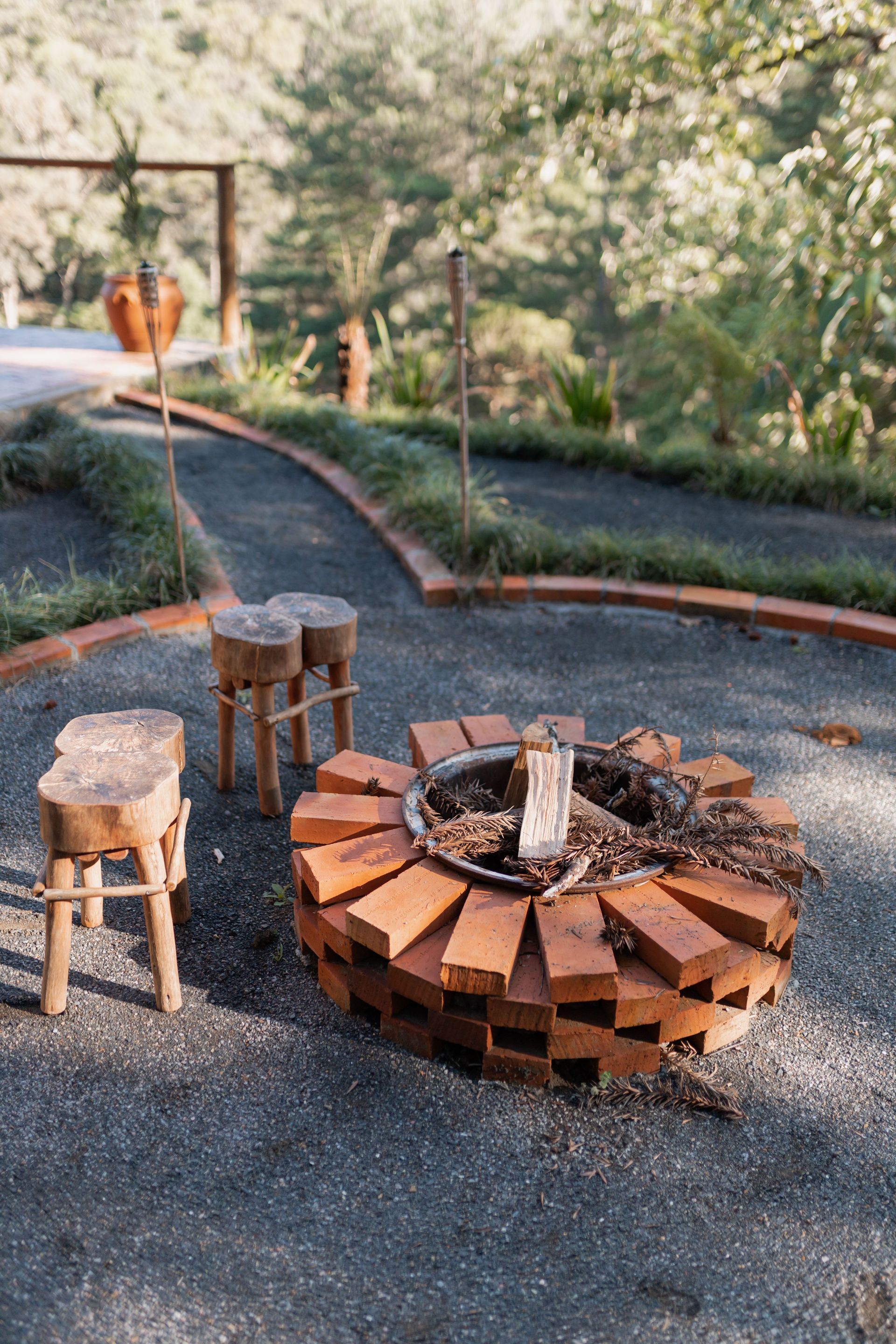
A wood-burning fire pit offers an experience that gas cannot reproduce exactly. The sound, aroma and changing flame are part of its appeal.
For homeowners who enjoy building a fire and spending several hours outside, wood can create a distinctive gathering place. It may feel particularly natural on larger properties or in backyard designs using natural stone, established landscaping and informal seating.
A traditional fire experience
Wood produces a dynamic flame that changes as logs burn. Many homeowners prefer that atmosphere for fall gatherings, family evenings and outdoor entertaining.
However, a wood fire requires more active participation. Someone must supply suitable firewood, start the fire, monitor it and handle the remaining ash after everything has cooled.
Fuel storage and access
A practical wood-burning design needs a plan for storing and moving firewood. The storage area should be convenient enough that bringing wood to the fire pit does not interrupt the way people move through the patio.
It should not block a walkway, compete with seating or become an improvised pile beside the finished hardscape. Firewood storage can be incorporated into the broader landscape or seating plan when it is considered early.
Smoke and nearby activity
Smoke direction can change with wind and site conditions. Placement should account for seating, doors, windows, neighboring properties and other frequently used areas.
A fire pit that looks attractive in a rendering may become uncomfortable if smoke repeatedly moves toward the dining table or house. We evaluate the property and intended seating arrangement before establishing the final location.
Compare convenience with atmosphere
For many homeowners, the decision comes down to convenience versus tradition.
A gas fire pit may be the stronger fit when the priority is frequent use, simple operation and a cleaner patio environment. A wood-burning fire pit may be preferred when tending a natural fire is part of the experience and the property has an appropriate location.
The decision may also be influenced by how long your typical outdoor gatherings last. Gas can work well for shorter, spontaneous use because the flame can be turned off when the evening ends. Wood makes more sense when homeowners are comfortable allowing time for the fire to burn safely and completing the necessary cleanup afterward.
We discuss these routines during the design process because the fire pit should suit the way you live, not require you to change your habits to accommodate it.
Let the property help determine the fuel type
Personal preference is important, but the property also shapes what can be built.
Lutherville backyards may include mature trees, established patios, older landscaping, changes in grade or limited access between neighboring homes. These conditions can influence the fire feature’s location, construction and connection to surrounding areas.
The design review should consider:
- Available patio and seating space
- Relationship to the home and property boundaries
- Wind exposure and surrounding vegetation
- Existing gas service or another proposed fuel source
- Construction access and underground conditions
Local requirements and manufacturer specifications may also influence placement and installation. Those details should be reviewed for the actual property before the design is finalized.
Plan the fire pit and seating together
A fire feature should not be designed separately from the people who will use it.
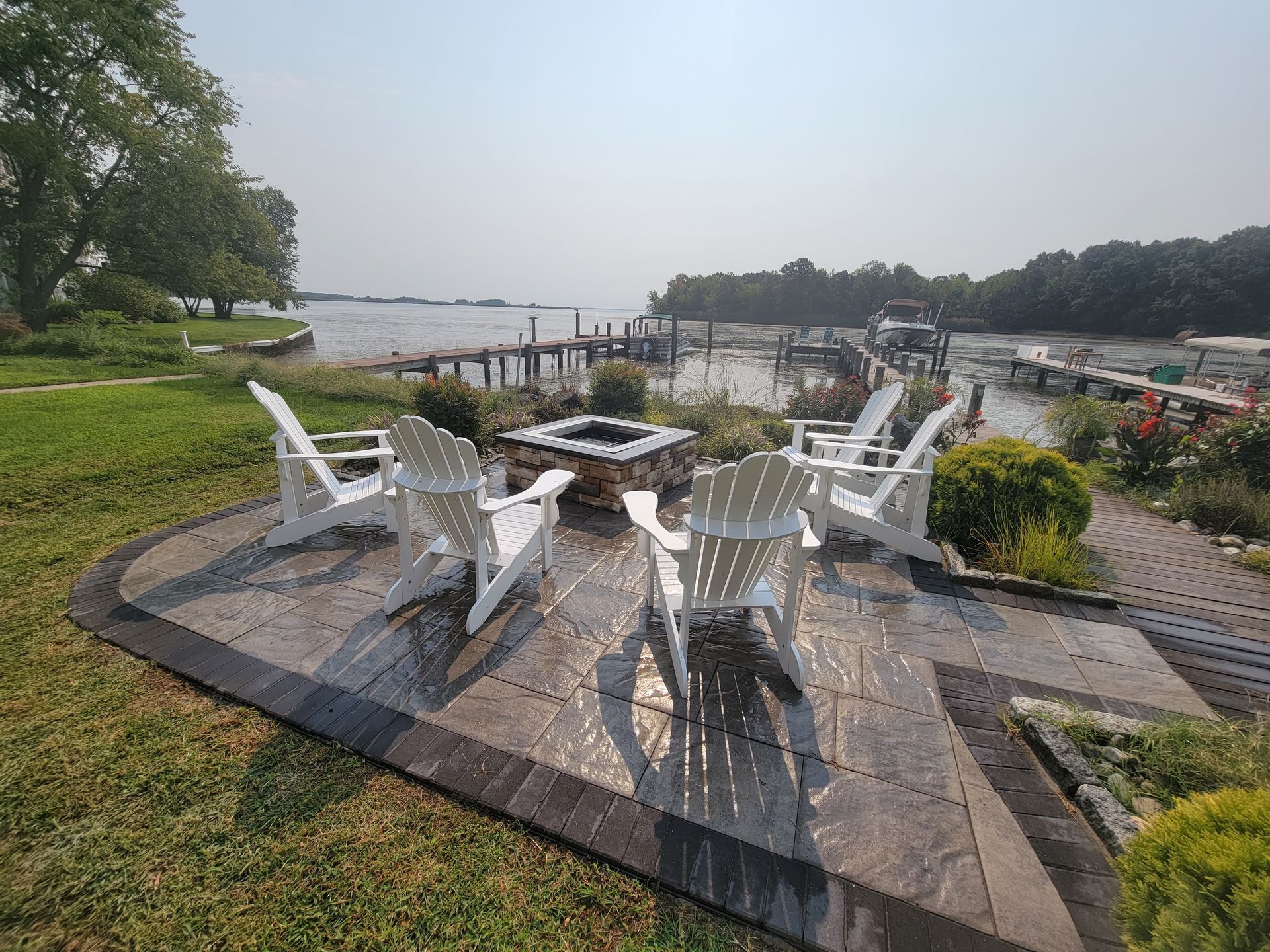
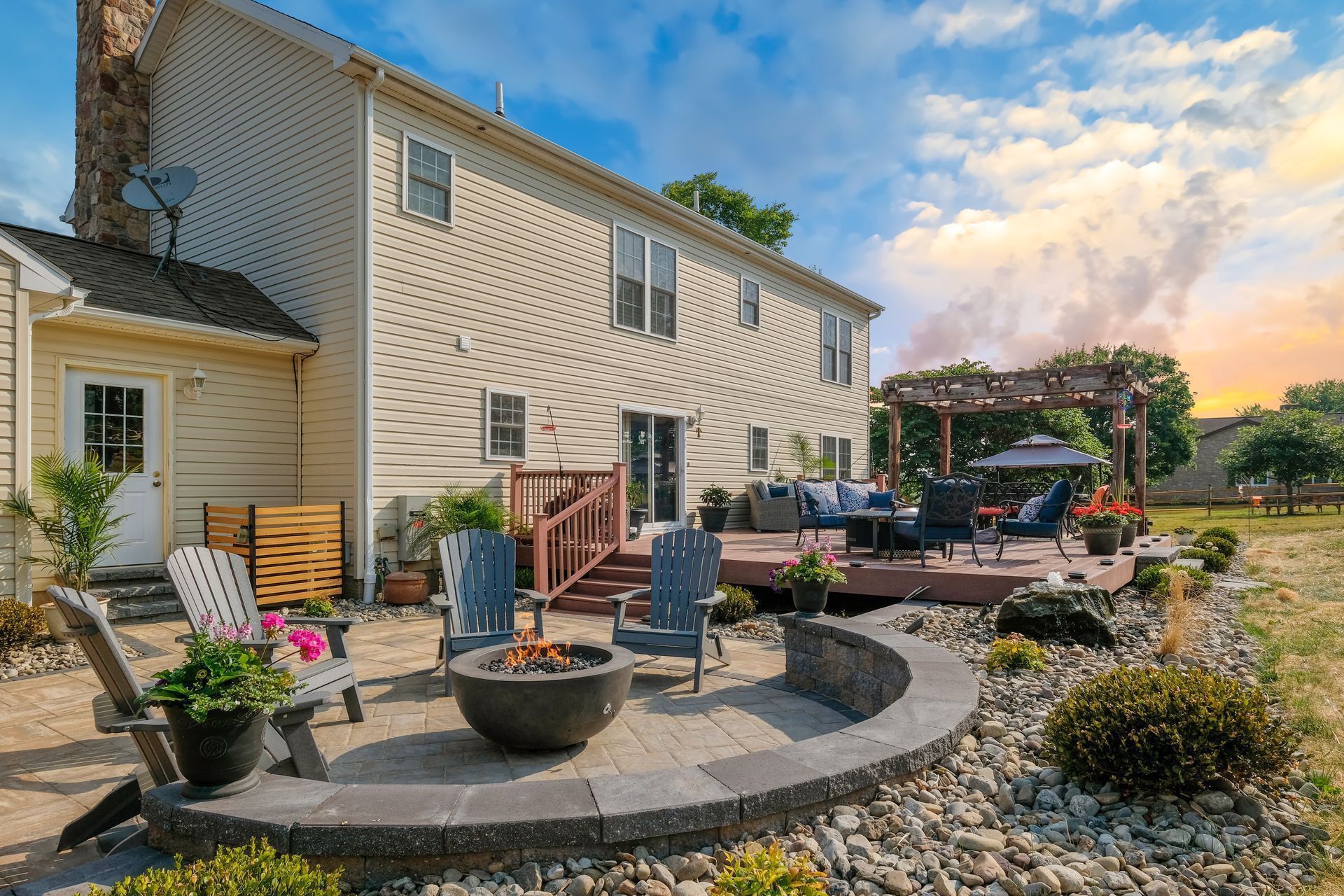
The size and shape of the fire pit affect how seating can be arranged. A round fire pit encourages conversation from several directions, while a linear feature may work better along a lounge area or at the edge of a more contemporary patio.
Built-in seating
A seating wall can define the gathering area and provide permanent places to sit. It can also help organize the relationship between the fire feature and the rest of the patio.
The dimensions must be coordinated carefully. Seating that is too close may feel uncomfortable, while seating placed too far away can weaken the sense of gathering around the fire.
Flexible furniture
Movable chairs give homeowners more freedom to adjust the layout for different groups. The patio still needs enough room for the furniture, walking paths and comfortable circulation.
We recommend planning for how chairs are actually used rather than measuring only their stationary footprint. Guests need space to pull chairs back and move around the group.
Connection to dining and cooking areas
When the backyard includes an outdoor kitchen or dining table, the fire pit can become a second destination after the meal.
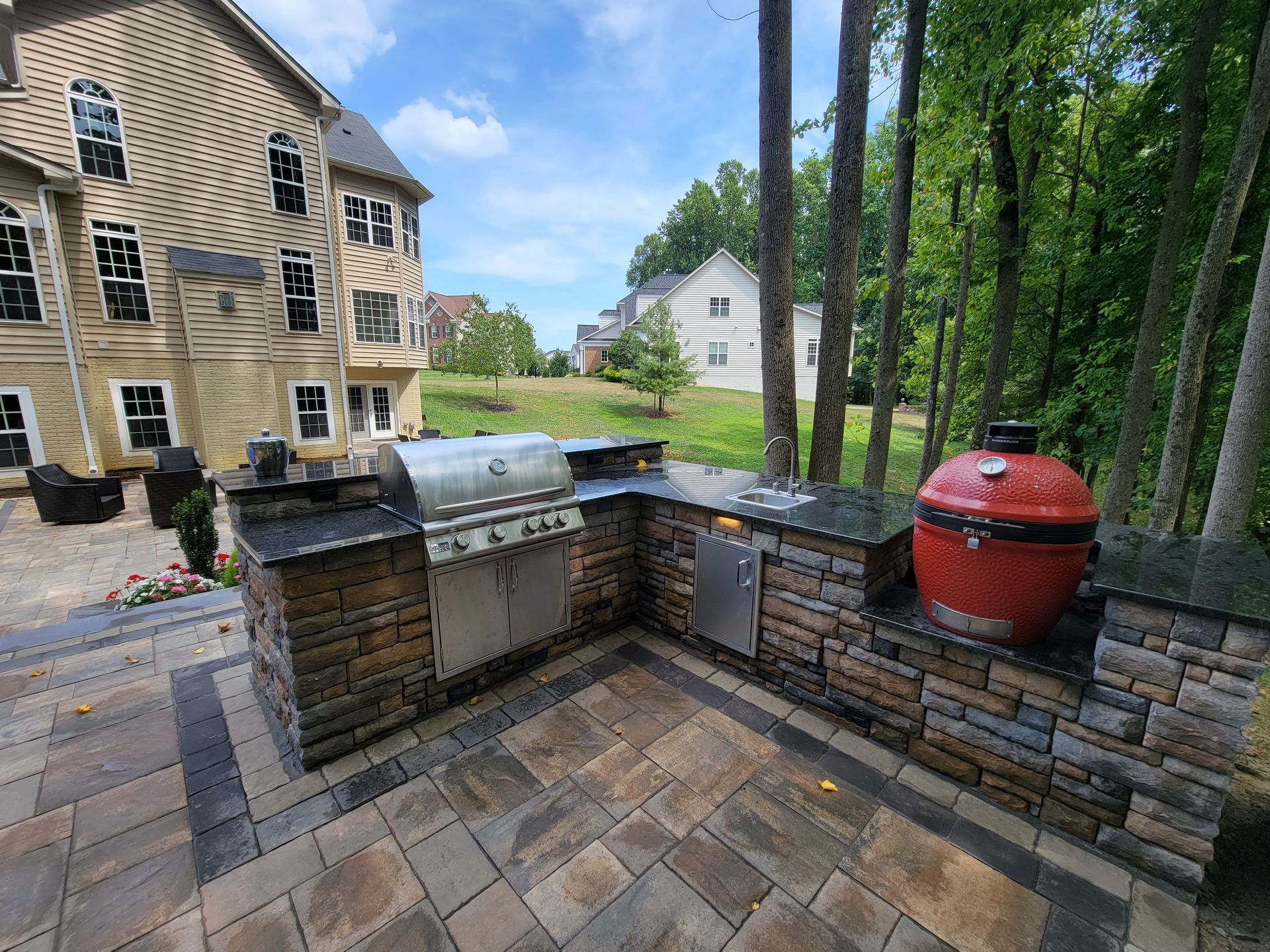
The areas should feel connected without placing seating directly in the cooking route. Bayside Outdoor Living’s outdoor kitchen services in Lutherville show how cooking, serving and gathering zones can be planned as parts of one outdoor environment.
Decide whether the existing patio can support the design
A fire pit can sometimes be incorporated into an existing patio, but the surface and layout must be evaluated first.
The contractor should review the patio’s condition, available dimensions, drainage and underlying construction. Adding a fire feature should not leave insufficient room for seating or create an awkward obstacle between the house and yard.
If the existing patio is too small or no longer supports the way the backyard is used, expanding or redesigning it may create a better long-term result. The Lutherville patio and walkway services provide additional examples of how hardscaping can connect gathering areas with the home and landscape.
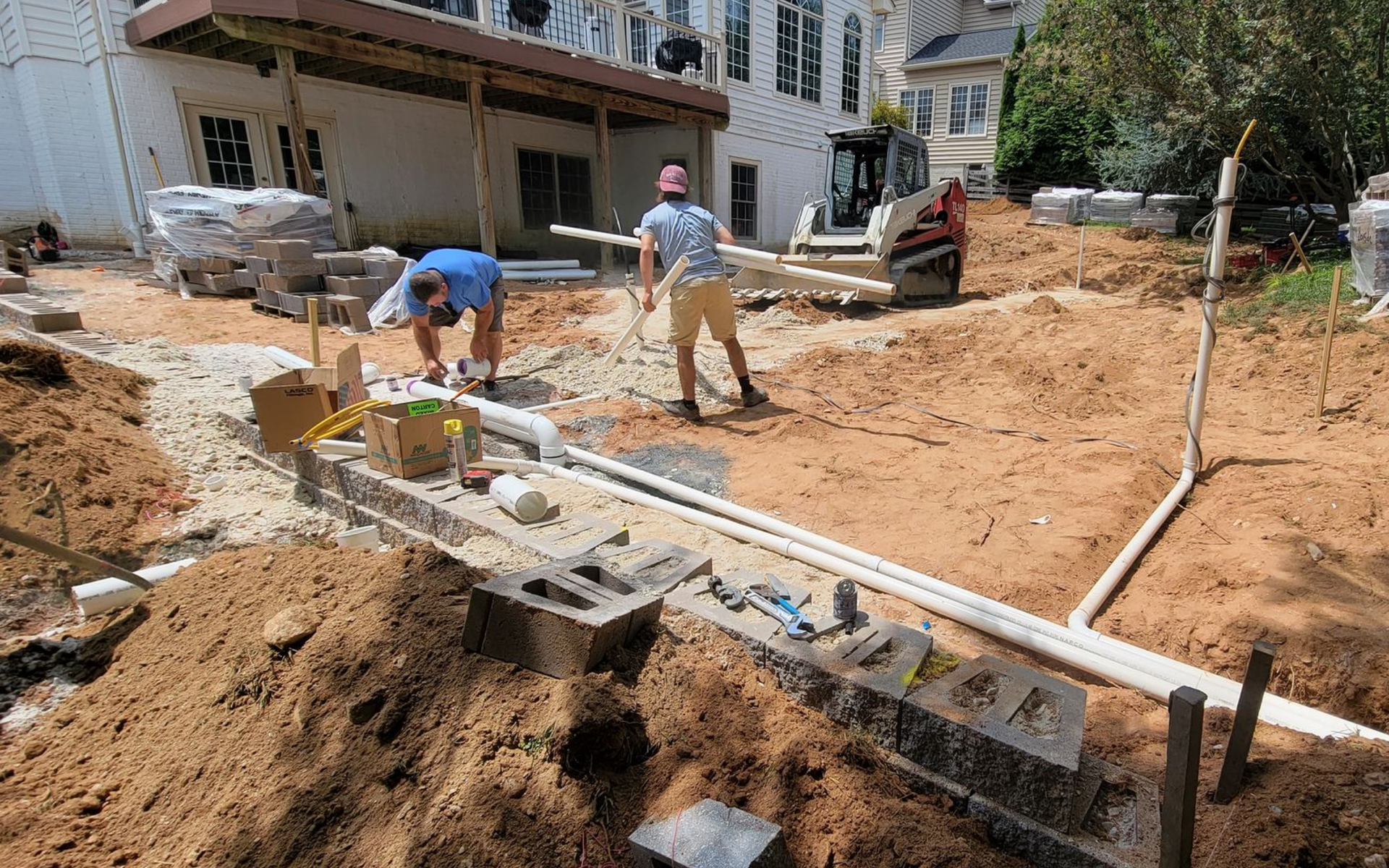
A new patio project also creates an opportunity to coordinate utilities, base preparation and fire-feature construction before the finished surface is installed.
Choose materials as part of the complete outdoor design
The fire pit’s exterior should coordinate with the patio, home and other permanent features.
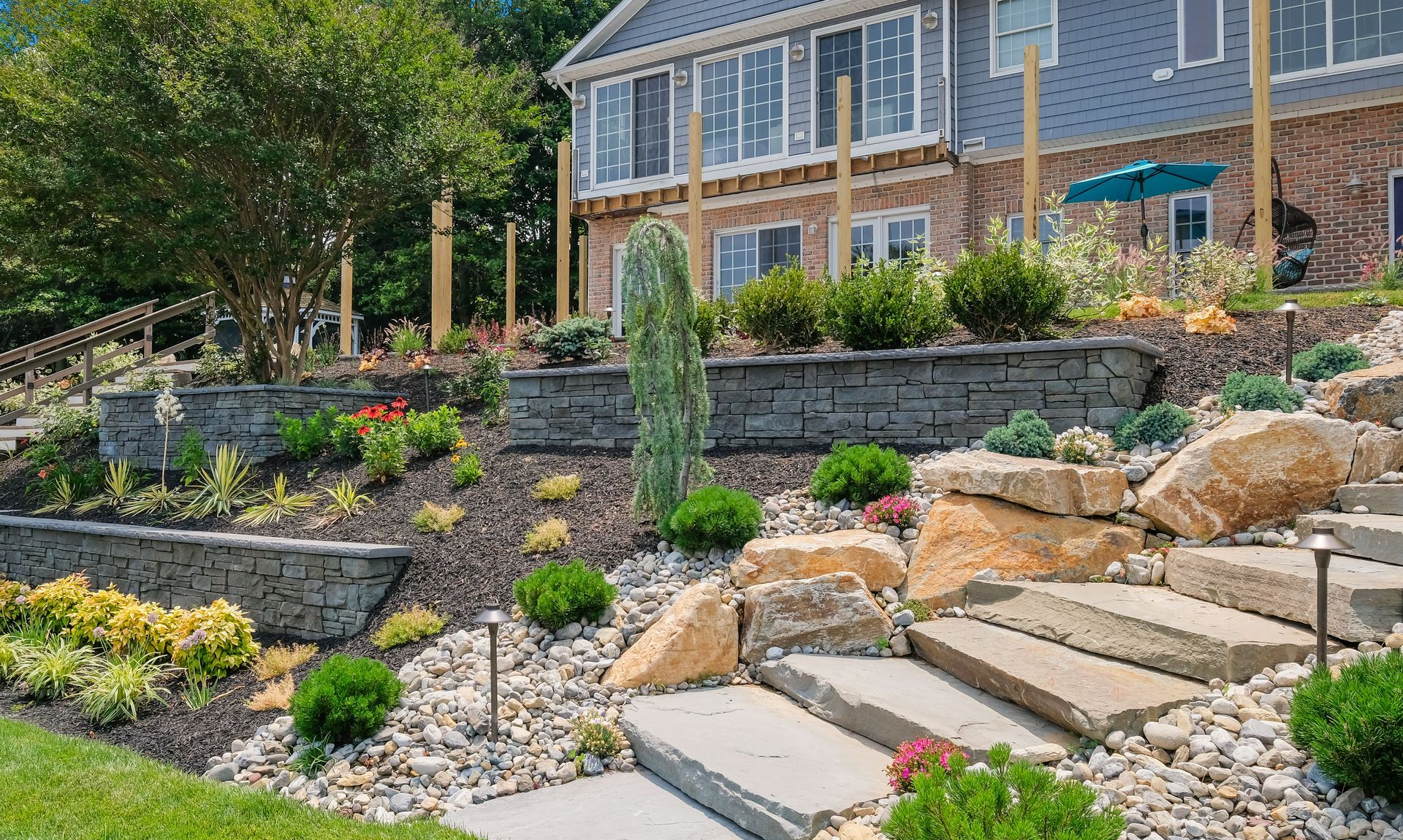
Natural stone can create a more organic appearance, while manufactured materials may support cleaner lines and consistent colors. The right choice depends on the architecture of the property and the visual direction of the outdoor space.
Material decisions should also consider exposure to heat, weather and seasonal temperature changes. Components must be appropriate for their position within the fire feature rather than selected only for appearance.
For gas fire pits, decorative media such as approved lava rock or fire glass may influence the finished look. Wood-burning designs require an interior and surrounding construction suitable for the intended use. The complete assembly should be designed as a system.
Understand what shapes the project investment
The fuel choice is only one part of the total project scope. The investment may be affected by the size and style of the feature, site preparation, fuel connections, patio construction, seating walls, lighting, drainage and access. A simple fire pit incorporated into an existing usable patio represents a different project from a complete gathering area with new hardscaping and built-in seating.
A useful estimate should explain what is included instead of presenting one number without context. Homeowners should understand the proposed materials, preparation, utility coordination, surrounding hardscape and finishing responsibilities.
Bayside Outdoor Living also offers financing options for homeowners planning qualifying outdoor living improvements.
Planning a custom gas or wood-burning fire pit for your Lutherville backyard?
Schedule a consultation with Bayside Outdoor Living
Consider lighting before construction begins
Fire creates atmosphere, but it may not provide enough illumination for the entire outdoor area.
Walkways, steps, patio edges and routes back to the house may need their own lighting. Fixtures should improve visibility without competing with the fire or shining directly into the seating area.
Planning the lighting before construction makes it easier to coordinate wiring, fixture locations and controls with the patio and landscape. It also helps the completed area feel intentional after dark rather than illuminated by one overly bright fixture.
The fire feature can remain the visual focal point while lower-level lighting supports safe, comfortable movement around it.
Think beyond the first fall season
October is an ideal time to recognize how much value a warmer gathering area could add to the backyard. However, the design should serve the property for years rather than respond only to one season.
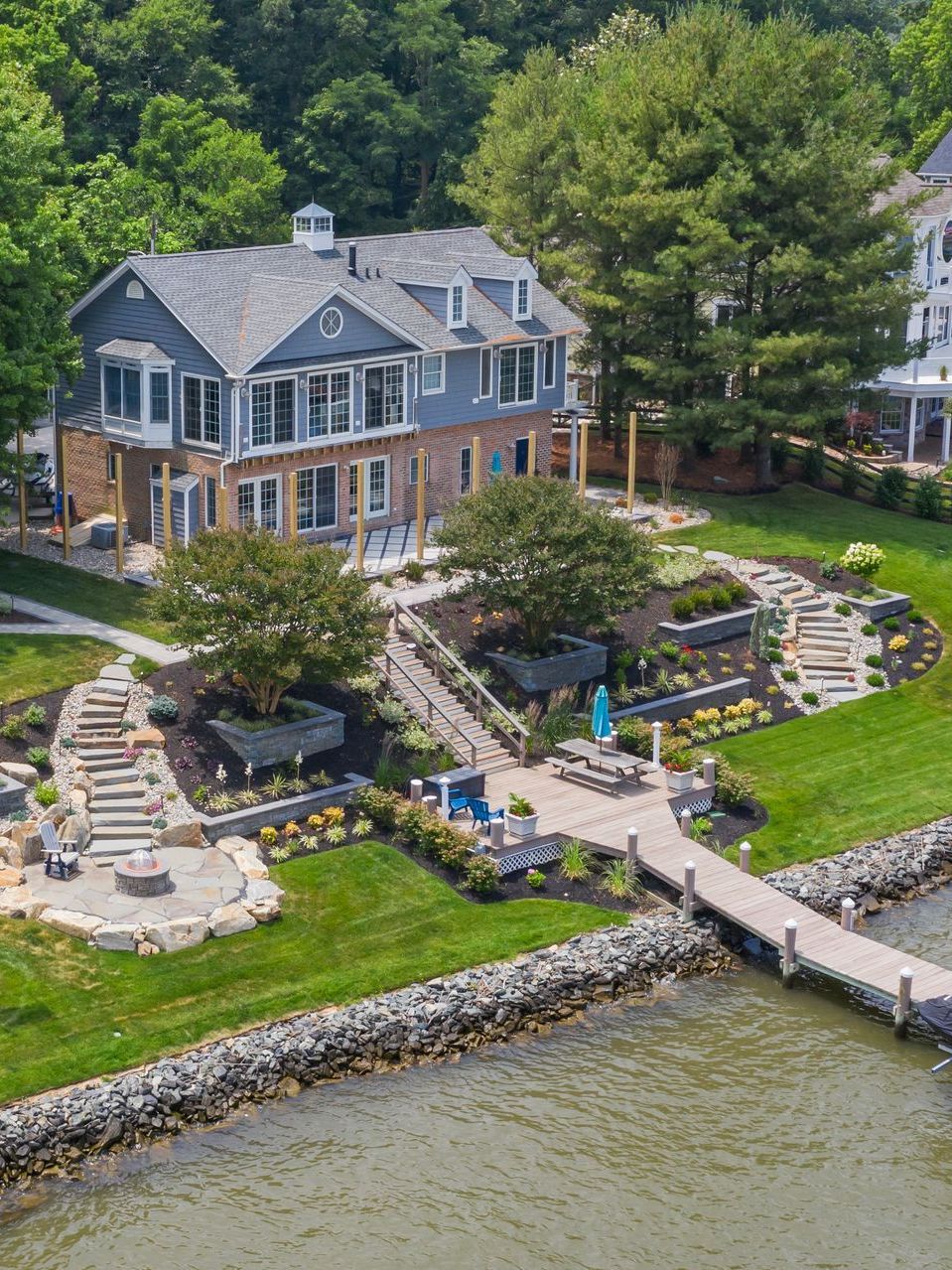
Consider whether the fire pit may eventually connect with an outdoor kitchen, pergola, pavilion or expanded patio. Even when those improvements will be completed later, identifying their likely locations can prevent the fire feature from limiting future options.
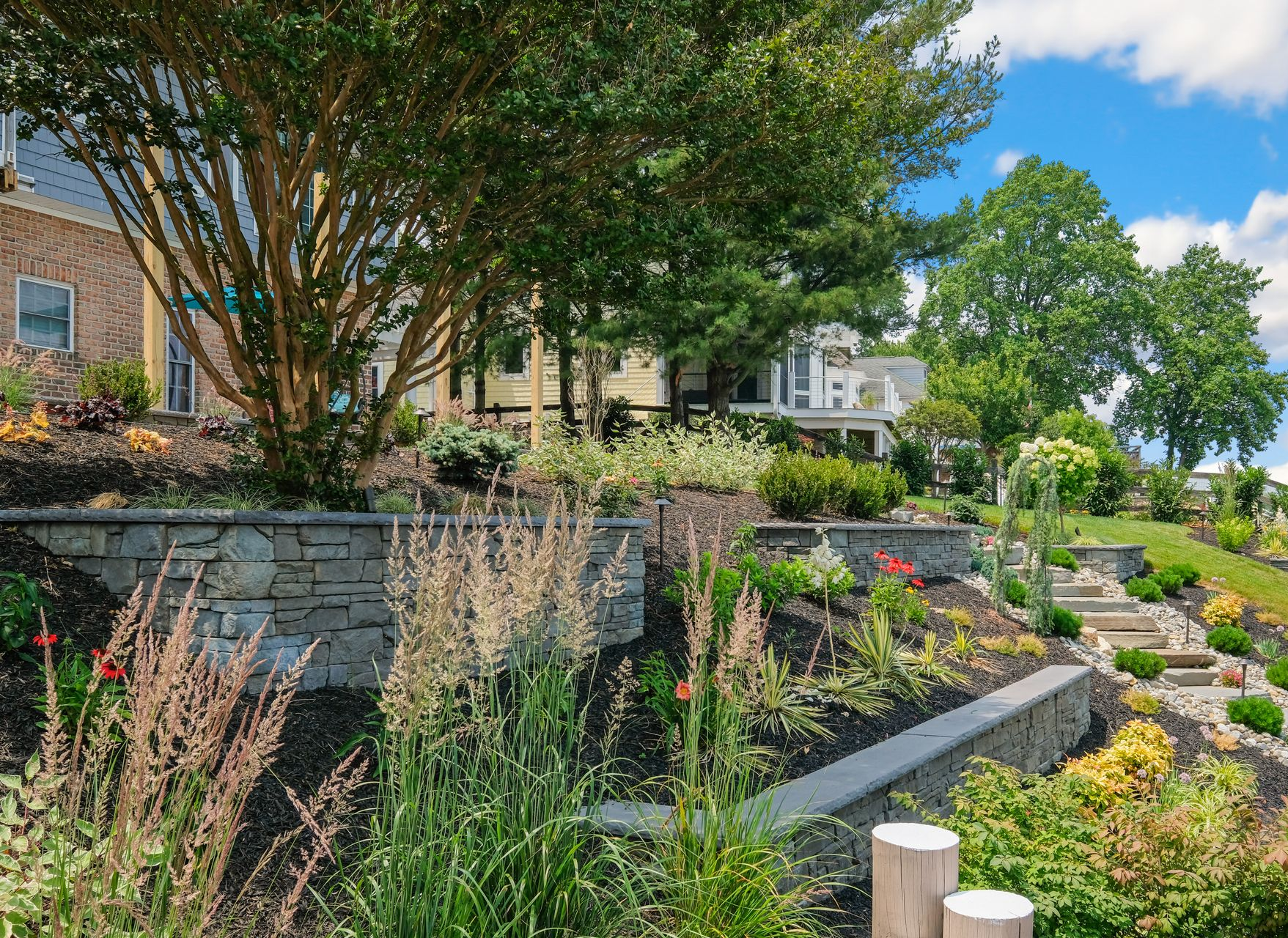
Our broader Lutherville landscape design services can help organize multiple outdoor features into a cohesive long-term plan.
A well-positioned fire pit should feel complete on its own while remaining compatible with the next phase of the property.
What happens during the Bayside design process?
We begin by learning how you want the outdoor space to feel and how frequently you expect to use it. We then walk the property to evaluate the current patio, access, grade, surrounding features and possible locations.
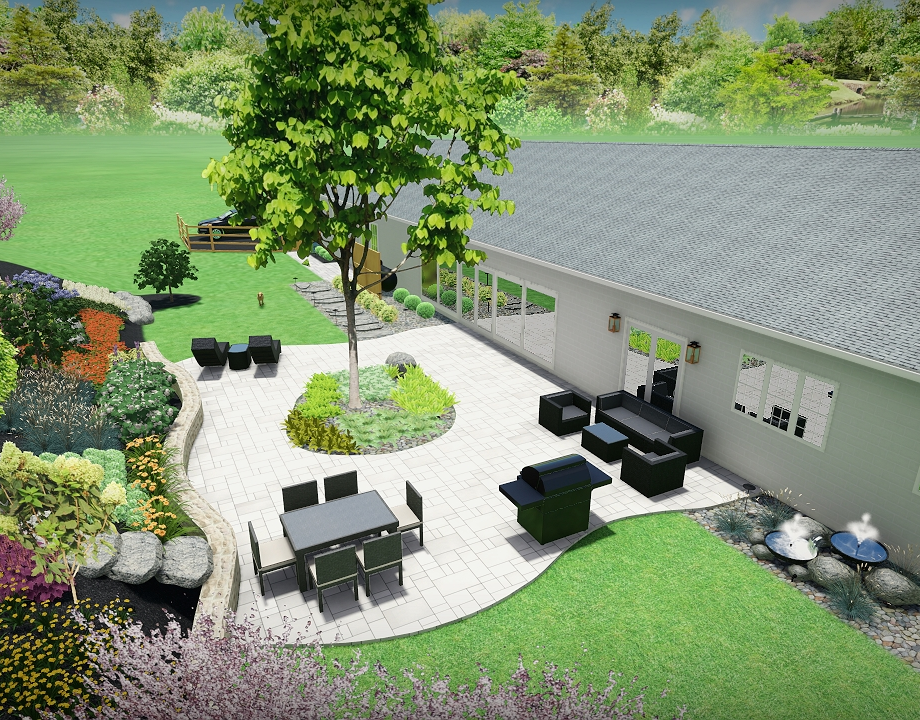
When the project includes multiple elements, a 3D design can help show how the fire pit, seating and patio will relate before construction begins. This makes it easier to review scale, circulation and material direction.
Once the design and investment are approved, we refine the construction details and organize the installation schedule. Our team remains connected throughout the build and completes a final walkthrough after the work is finished.
This process allows the gas-versus-wood decision to become part of a complete outdoor plan rather than an isolated product selection.
Start planning your Lutherville fire pit with Bayside Outdoor Living
Gas and wood-burning fire pits can both create a backyard destination. The better option is the one that fits your routine, property and expectations for maintenance, atmosphere and convenience.
At Bayside Outdoor Living, we design custom fire features around the entire outdoor experience. We consider placement, seating distance, patio connections, materials, lighting and how guests will move through the space.
Explore our custom fire pit and outdoor fire feature services, then contact Bayside Outdoor Living to begin planning a fire pit for your Lutherville home.
Related outdoor living resources
Recent Posts